Strategy
AI is not a tool you buy. It is a change in how the company operates.
That is why we start with the decision, not the technology: where AI pays off first, how it is measured and what has to change in the operation for it to stick.

The change
Software was bought, deployed and left behind. AI has no go-live date.
It cuts across areas, changes routines and has to prove results every week. Most companies run an adoption program when they need a change of operation. We work with five principles to make that change happen.

Five principles of our AI strategy.
-
01
Solve the right problem, in the right order.
Speed comes from starting right, not from starting first. The diagnostic picks the three use cases with the clearest return and the sequence between them.
-
02
AI by workflow, not by department.
The month-end close runs through controllership, sales and IT. AI goes into the whole flow, with each area's rules, instead of becoming an isolated pilot.
-
03
Every number with its source and its math.
Every answer comes out with the source, the rule applied and a receipt. Without that nobody trusts it, and AI nobody trusts changes no operation at all.
-
04
Build the muscle in-house.
The Data Omnis team delivers and hands over. Your team learns to operate, to teach Omnis and to expand to the next case.
-
05
Measure by results, not just by cost.
Hours given back, errors avoided, faster decisions. The success metric is defined before starting and tracked afterwards, every week.
 Where it starts
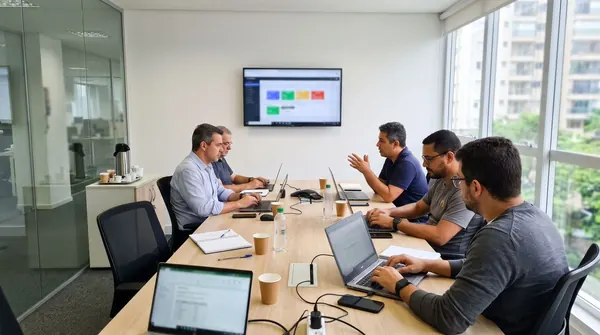
AI Diagnostic: 2 to 4 weeks, fixed price.
We map the processes with the business areas, pick the three use cases with the clearest return and deliver the deployment roadmap, with the math for each case.
Talk to an AI expert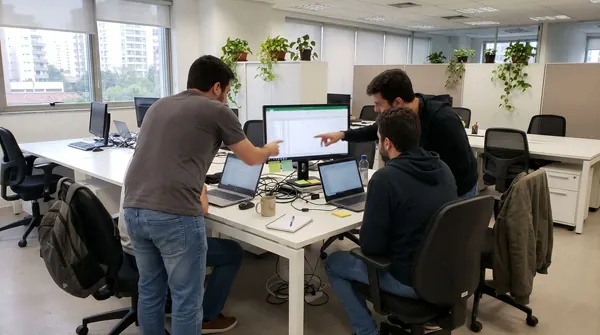 After the diagnostic
Deployment inside your operation.
An engineer and a strategist put the first case into production in weeks, prove the result and hand control to your team.
How we deploy →Change how your company runs with AI.
Start with the diagnostic: in 2 to 4 weeks, you leave with the three use cases, the expected return of each one and the deployment roadmap.